
Using Your Relationship Triggers to Heal (Instead of Staying Stuck)
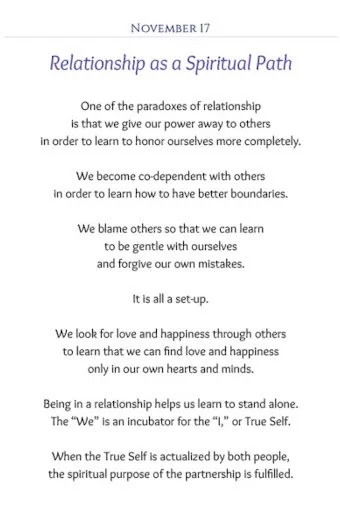
A poem from Paul Ferrini
In other words, what Paul Ferrini’s poem is saying is that you can use relationships to heal and grow or to lose yourself.
You can spend all your time wishing the other person would change so you don’t have to, or you can use all the triggers you’re experiencing in your relationships to get more intimate with yourself, to do your work to heal, and to elevate your consciousness.
The choice is yours.
But you’ve got patterns to unpack
Growing up, my dad was the only one in our household who was allowed to do anger. To keep him from blasting his rage onto me, I played the perpetual Catholic good girl.
Into adulthood, I denied my wants and needs, bottled up my anger, and walked on eggshells until, inevitably, the pain got so loud, I’d explode at the drop of a hat. Then, I’d apologize for my existence and go back to losing myself, desperately trying to be everything for everyone.
I didn’t know how to deal with my pain. I didn’t know how to have a voice. I didn’t know how to use anger in a healthy way.
So I unknowingly married an angry man (though he wasn’t as volatile as my father). It’s what I unconsciously thought love looked like—because it’s what was modeled in my childhood.
While we were married, I played out the joy, happiness, and sadness my then-husband didn’t have access to and he expressed the anger I couldn’t touch.
It obviously wasn’t sustainable.
Four years before we divorced, Nathan and I went to a marriage counselor four times. At that point, he refused to talk to me about anything except the children—unless we were in front of our counselor.
During one of those sessions, I said I was willing to work on the relationship. He said he was too.
I blew. Nothing about his actions even remotely suggested he wanted to be married to me. Nothing. He didn’t show up. He wasn’t talking with me. He barely acknowledged me at all.
I wanted to be happily married. I wasn’t. This life was a repeat of my childhood trying to please my dad by losing myself. In the session I blasted him with all the ways his actions told me he was done.
Finally, exasperated, he blurted out that he had wanted a divorce for the last three years but was afraid that if I knew, I’d pull the plug on the marriage immediately and he wasn’t financially ready to support himself.
Relief washed through my body as I finally heard the Truth. Even before he admitted it, his actions had been loud and clear. The lies and pretending were downright exhausting and hurtful to all of us.
And… I still had work to do
Nathan and I continued to live together for four years before we officially divorced. With one kid at home and two in college, we wanted to responsibly disentangle our 23-year marriage. It was a lot.
I used those 4 years to take personal responsibility for my own happiness. I used them to do my work to get even more intimate with myself. I used them to unpack triggers I didn’t even know were there.
During these 4 years, Nathan would walk through the kitchen, and pissily open up a window with a huff because he didn’t like the smell of the Indian spices I used for cooking. He’d be the super passive-aggressive, angry fuck he often was, only now, he directed most of that anger onto me.
And as he did, I’d take note of my body and my feelings. I’d see if it was possible to keep my heart open. Sometimes it was, sometimes it wasn’t. But when I was triggered, I knew I was being shown what was up next for me to heal. Even though it didn’t always feel like it, it was all a gift.
Because living with a judgemental, angry man showed me how angry I was. (I hadn’t known.)
I thought “good girls” weren’t supposed to get angry.
I thought I had to constantly suppress my feelings, pretend I didn’t have wants and needs, and treat everyone (especially Nathan) like they were more important than I was. I thought that’s what would make me happy (or at least keep everyone from abandoning and rejecting me).
But we all have a lot to be angry about. And anger is a normal part of the human experience. It isn’t a problem when you use it in a conscious, healthy way.
The problems arise when you suppress your anger; when you pretend it isn’t there; when you bottle it up so long you can’t help but recklessly explode over the silliest of things (like a bent paperclip or the kid’s toys thrown over a freshly cleaned living room).
Until you get really honest with yourself about ALL your feelings, you’ll never get to peace, freedom, love, and connection.
So, even after all the work I’d already done, when I lived with my soon-to-be-ex-husband for four years, I had even more to do. I challenged myself to use those four years living with an angry man to take personal responsibility for my happiness no matter what was going on around me.
I stopped blaming him for my dissatisfaction.
I stopped playing the victim.
I stopped giving my power away.
And I got super honest with myself about facing my own anger. Instead of plastering on a fake smile and pretending my feelings didn’t matter, I stopped suppressing how I felt.
I used my feelings to grow my awareness and to process the pain from my past.
As a child, I’d go into a freeze response around anger, so I had to see and unpack my knee jerk reactions and find new, empowered ways to respond that let me live more present and open-heartedly.
Another way to say that is, I did exactly what Paul Ferrini’s poem talked about. I lived the contrast of suppressing my emotions, playing the good girl, walking on eggshells, and being in codependency, and through it, I learned to empower myself. I took 100% responsibility for my feelings and what I did with them. I used my relationship with my ex to get even more intimate with myself.
And it was soooo worth it.
What are you bringing to your relationships?
At one point, my ex got angry at me for taking the shit and abuse he’d dealt me over the years and for not standing up for myself. He was right. In rare moments I would stand up to him, but overall I never fully met the bully… until I did my work.
After our divorce, Nathan talked with each of our children individually about how angry I could be. He was right. I could. Eventually, I realized his anger had nothing on mine.
But I didn’t stay stuck in it.
When I did my work to face the past, to meet the pain and process it, I didn’t have to stay in cycles of suppressing my anger and exploding in rage. I didn’t have to give my power away to Nathan (or anyone else), hoping he’d change so I didn’t have to. I even (eventually) stopped controlling Nathan’s relationship with our children and let him take responsibility for his actions and inactions too.
That’s true freedom. And it only comes from doing your work.
So what about you? What are you bringing to your relationships (including the one you have with yourself)?
Are you giving until it hurts and then giving some more?
Are you expecting your partner to show up and pursue you even though you’re not showing up for them in the way you want to be treated?
Are you desperately trying to do whatever it takes to make the other person happy?
Are you angry at your partner for not doing what it takes to make you happy (even though you don’t know what would make you happy and they can’t read your mind)?
Are you ignoring your own wants and needs (because if you don’t name them, you can pretend you’re satisfied in a relationship where none of your wants and needs are met)?
Are you so busy denying yourself that it pisses you off when your partner takes care of themself?
Are you stuck believing you need another person to love you in order to feel safe?
Every relationship is an opportunity to lose yourself, or to lean in, heal, and grow. The only difference is the intention and focus you bring to it.